🎹 Piano Movers
Pianos are heavy, delicate, and top-heavy — the wrong move can damage the instrument, the floor, or the movers. Specialist piano movers use piano boards, skid boards, and straps to do it safely.
- Local piano moves commonly run $150–$400 for an upright and $250–$600 for a grand, more with stairs (labeled estimate).
- Specific piano-moving equipment (piano board, skid board, straps)
- Experience with your piano type (upright, baby grand, grand)
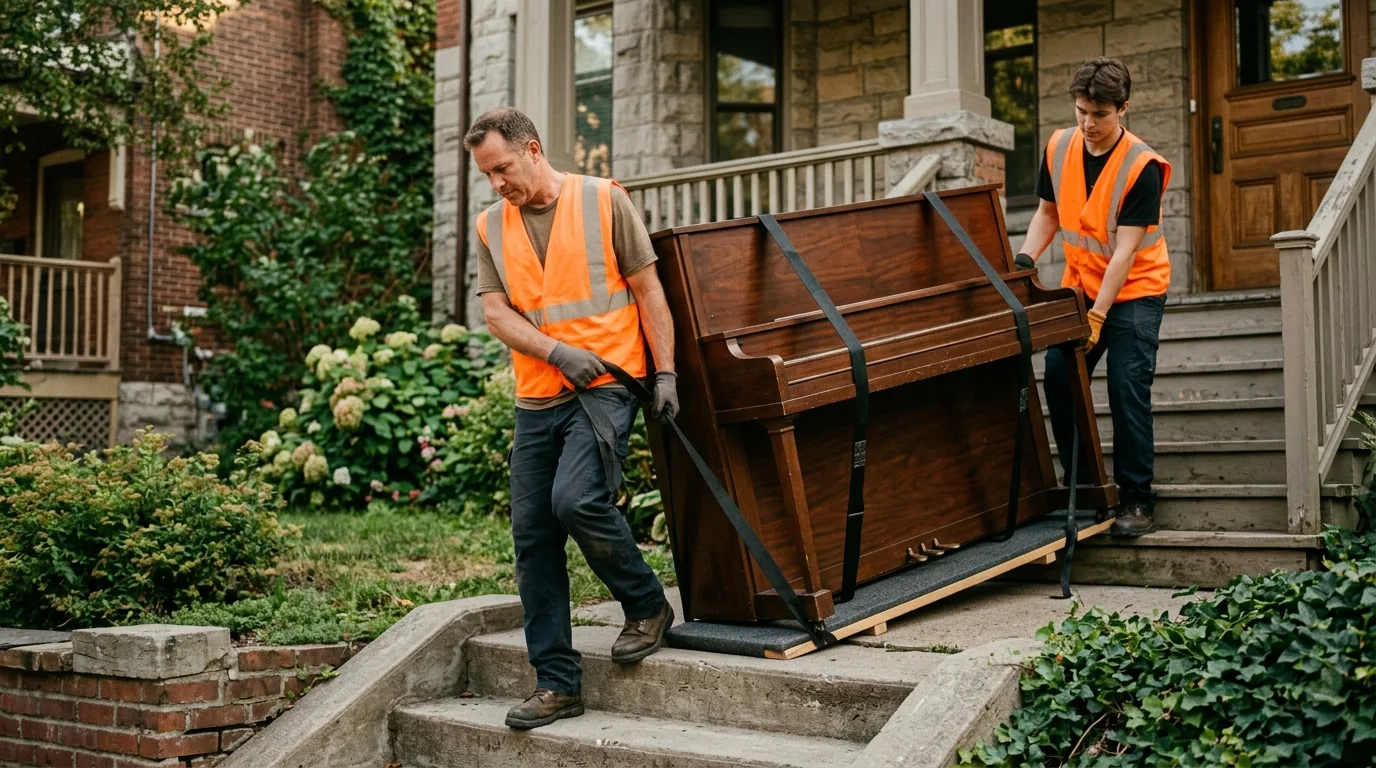 Piano Movers across Idaho, Oregon & Washington
 Typical cost: Local piano moves commonly run $150–$400 for an upright and $250–$600 for a grand, more with stairs (labeled estimate).
Pianos combine three things that make them dangerous to move: they're heavy, they're top-heavy, and they're delicate. An upright runs roughly 300 to 500 pounds; a grand can be 500 to 1,200. The weight sits high and the cast-iron plate inside is unforgiving, so a piano that tips or gets set down hard can crack its own frame, damage the action, gouge a floor, or injure whoever's under it. This is a job where technique beats brute force every time.
The right approach depends on the type. An upright is strapped to a padded piano board (a heavy dolly built for the job) and rolled, with extra care on turns and thresholds. A grand is partially disassembled — the lid is closed and secured, the pedal lyre and legs are removed — and the body is tilted onto its straight side and strapped to a padded skid board, then rolled and ramped. Stairs are handled slowly with multiple movers and, sometimes, a stair-climbing dolly. None of this is improvised: it's a standard, learnable process that general crews often don't have the equipment or reps to do safely.
Two things people forget: tuning and acclimation. A piano almost always goes out of tune when it's moved and, more importantly, when it settles into a new room's temperature and humidity. Give it two to four weeks in the new space, then have it tuned — tuning it the same day is usually wasted money. If the move involves a big climate change, the acclimation matters even more.
Cost tracks the type and the obstacles: uprights are cheaper than grands, and stairs, tight turns, and long carries add labor. For a valuable or sentimental instrument, confirm the mover's insurance actually covers the piano's value, not just a minimum per-pound figure.
What to look for in piano movers
- Specific piano-moving equipment (piano board, skid board, straps)
- Experience with your piano type (upright, baby grand, grand)
- Insurance covering the instrument
- A tuning recommendation after the move (pianos need it once settled)
Find piano movers near you
The best way to price this job is to compare a couple of quotes from crews that do it regularly. Every mover we list is a real, active local business ranked on its verified Google reviews — start with your city below, or use the form at the top of the page to get matched with vetted movers who serve your route across Idaho, Oregon, and Washington.
Whatever you're moving, the rule is the same: get the price in writing, confirm the crew has done your specific job before, and check that its insurance actually covers the value of what's being moved. A low quote from a company that treats a specialty item like ordinary furniture is rarely a bargain once something breaks.