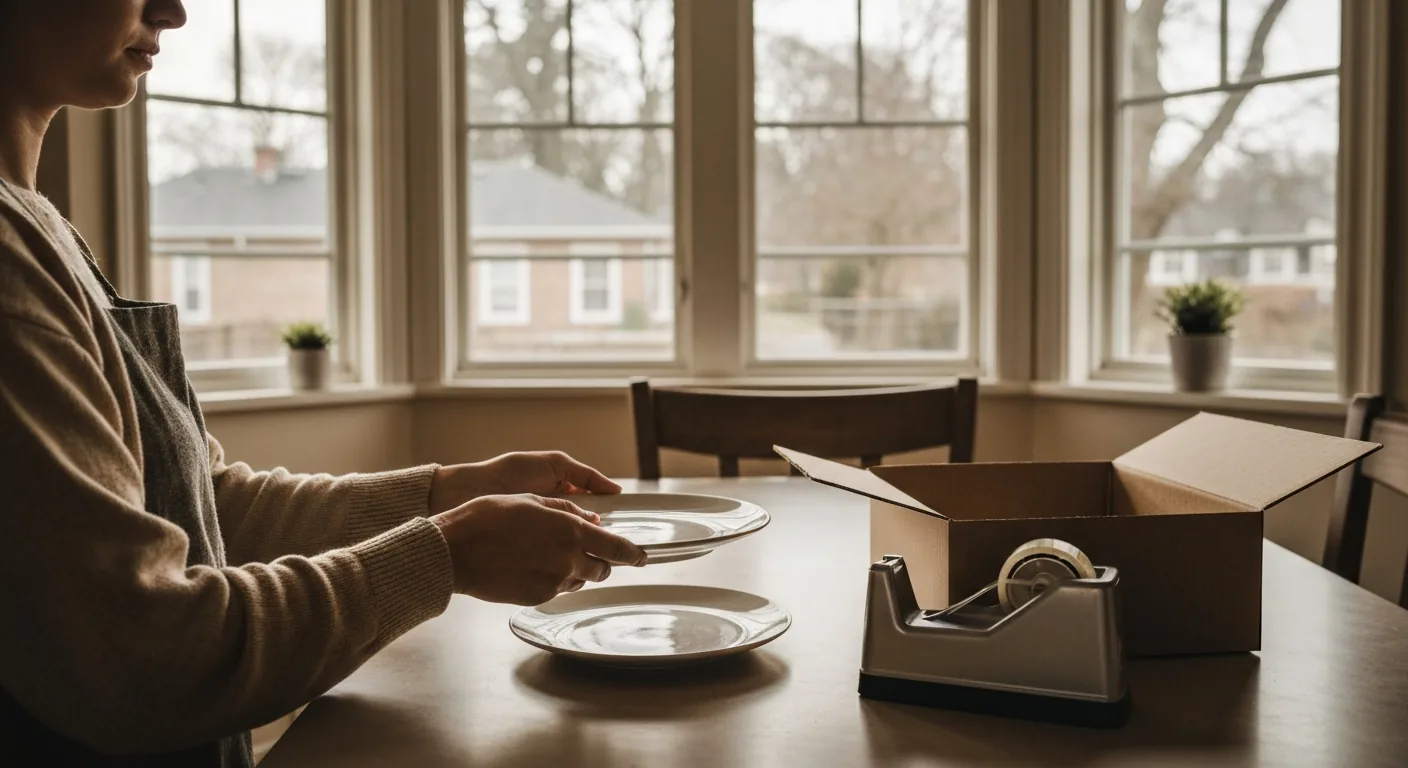
Good packing does two jobs: it protects your things, and it keeps an hourly move from dragging on. Both come down to a few habits.
Start with supplies and a plan
Gather sturdy boxes in a few sizes, packing tape, paper or bubble wrap, markers, and padding. Then work room by room, starting with what you use least — off-season clothes, books, spare linens, decor. Leave daily essentials for last.
Before anything goes in a box, declutter. Donate, sell, or toss what you won’t want in the new place. Moving less is the cheapest upgrade there is.
Pack boxes that survive the trip
- Heavy items in small boxes, light items in large ones. Keep each box under about 50 pounds so it’s liftable and won’t blow out the bottom.
- Reinforce the bottom of every box with tape.
- Fill all empty space with paper, towels, or padding so nothing shifts in transit.
- Don’t leave boxes half-full — they collapse when stacked.
Handle fragile items with care
- Wrap each dish, glass, and breakable individually.
- Pack plates on their edge, like records, not stacked flat.
- Cushion the bottom and top of the box, and fill the middle gaps.
- Mark these boxes FRAGILE and tell the crew which they are.
Label so unpacking is painless
Write the room and contents on the top and at least one side of every box — “Kitchen: pots + pans,” not “misc.” Number your boxes and keep a quick list if you want to track everything. Your future self, exhausted at the new place, will thank you.
Keep an essentials box with you
Pack one box (or bag) with what you’ll need the first night: toiletries, medications, chargers, a change of clothes, basic tools, snacks. Keep it with you, not on the truck.
How many boxes will you need?
A rough guide so you buy enough the first time (nothing stalls packing like running out of tape at 9pm):
| Home size | Small | Medium | Large | Specialty |
|---|---|---|---|---|
| Studio / 1BR | 10–15 | 8–10 | 5–8 | 1 wardrobe, 1 dish pack |
| 2 bedroom | 15–20 | 12–15 | 8–10 | 2 wardrobe, 1–2 dish packs |
| 3 bedroom | 25–30 | 18–22 | 10–14 | 3 wardrobe, 2 dish packs |
| 4+ bedroom | 35+ | 25+ | 15+ | 4+ wardrobe, 3+ dish packs |
Buy a little extra tape and paper — you’ll use it — and keep a few boxes aside unflattened for last-minute odds and ends.
Packing room by room
- Kitchen is the slowest room — start early. Use dish-pack boxes and pack plates on edge. Wrap glasses individually; nest bowls with paper between them. Seal and bag anything liquid.
- Bedrooms: wardrobe boxes let hanging clothes go straight from closet to box. Vacuum-bag bedding and off-season clothes to save space. Keep a “first night” set of sheets and towels in your essentials box.
- Bathroom: toss expired products, bag anything that could leak, and keep a small kit of daily toiletries with you.
- Living room: remove TVs from mounts and pack them upright in a TV box or heavily padded; keep the cables and remotes bagged and labeled. Photograph the back of your electronics so re-wiring is easy.
- Garage and outdoors: drain fuel from mowers and trimmers (movers won’t transport flammables), coil cords, and box tools by type.
What movers won’t (and shouldn’t) transport
Reputable movers won’t load hazardous or perishable items — plan to move these yourself or dispose of them:
- Flammables and chemicals: propane tanks, gasoline, paint, aerosols, cleaning chemicals, pool chemicals.
- Perishables: frozen and refrigerated food, open pantry items.
- Irreplaceables — keep these with you: cash, jewelry, important documents, medications, laptops, and small valuables.
Load smart if you’re loading yourself
Doing a labor-only or DIY move? Load the truck heaviest-first and low: appliances and furniture against the cab, boxes stacked heavy-on-bottom, and soft items filling the gaps so nothing shifts. Use straps at intervals rather than one giant wall at the end. Load an “unload-first” essentials zone by the door.
A simple packing timeline
- 4–6 weeks out: rarely-used rooms — off-season clothes, books, decor, the garage.
- 2–3 weeks out: most of the house, leaving out only what you use weekly.
- Last few days: the kitchen and daily items.
- Night before / morning of: the essentials box and a small kit of tools and cleaning supplies.
Once you’re packed, the last step is the crew. Compare reviewed movers by city and use our moving checklist to keep the timeline on track.